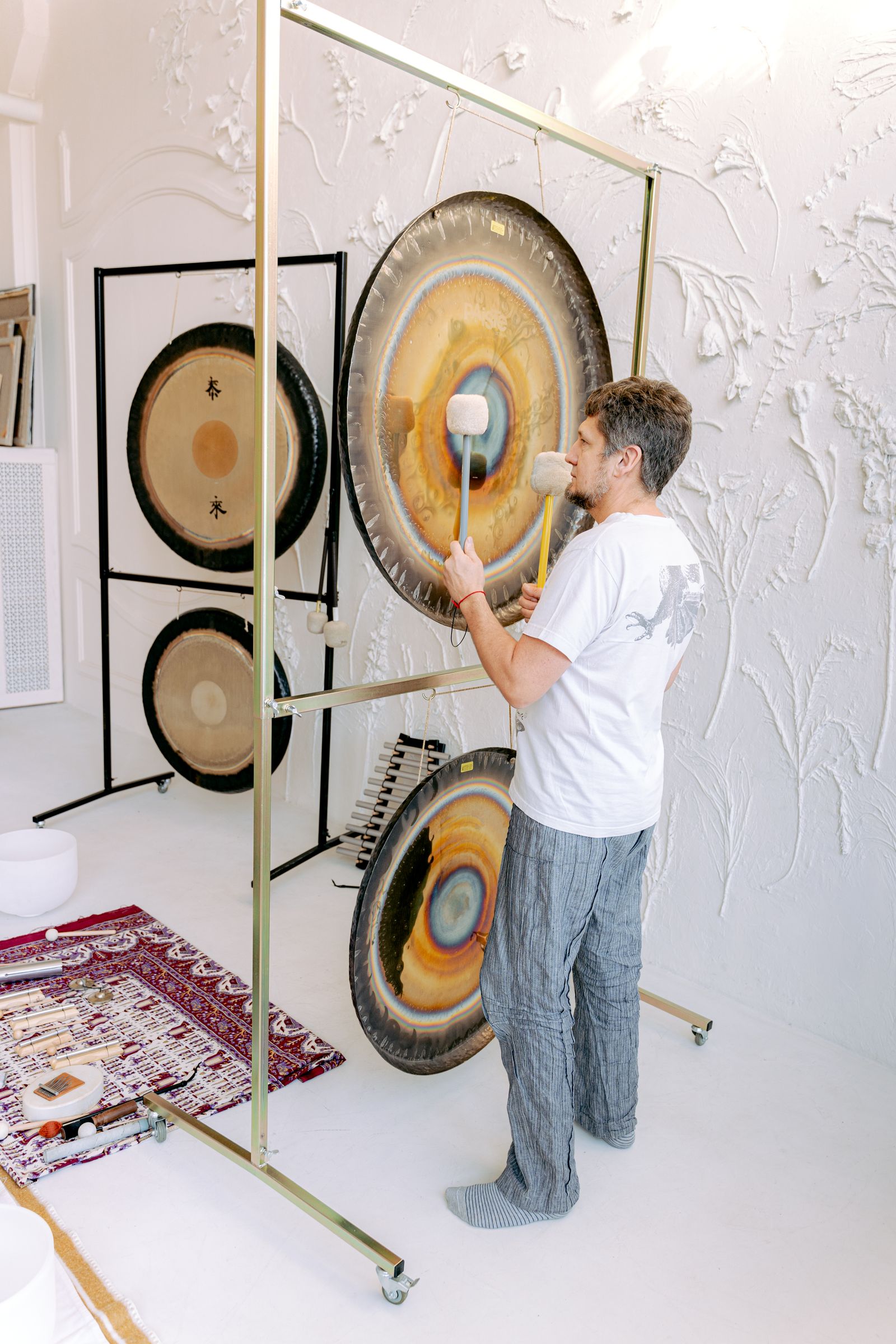
Every sound healing session looks effortless from the mat — a practitioner moves quietly between instruments while the room drifts somewhere soft. Underneath that ease sits real technique. Here are five methods we return to in our Berlin studio, and how each one serves well-being.
1. Bowl sequencing, not bowl stacking
Beginners play every bowl they own, as often as possible. Experienced practitioners play fewer bowls with more intention: a low bowl to ground, a mid bowl to carry, silence to let the tone land. Well-being comes from the arc — beginning, deepening, returning — not from density.
2. Gong dynamics
A gong can whisper or roar, and the distance between those extremes is where therapy lives. We build intensity slowly over minutes, watch the room's breathing, and release before the sound becomes effort. The nervous system learns it can meet intensity and survive it.
3. Targeted fork placement
Weighted tuning forks placed near the shoulders, jaw and feet deliver vibration precisely where modern bodies hold tension. A two-minute fork sequence at the end of a session often does what twenty more minutes of bowls cannot.
4. Breath-led toning
The practitioner's voice — humming, vowel tones, simple chants — signals safety to the room in a way metal cannot. Guests frequently report that the voice passages are the moments they finally let go.
5. Silence as an instrument
The most underrated technique is stopping. Thirty seconds of true silence after a full passage lets the body integrate what it heard. We score silence into every session the way composers score rests.
Together these five techniques turn pleasant sound into genuine therapy. If you would like to learn them hands-on, our Sacred Resonance course teaches the bowl foundations, and Sound Alchemy covers gongs and forks in depth.
